 decordip Garden and patio decoration inspiration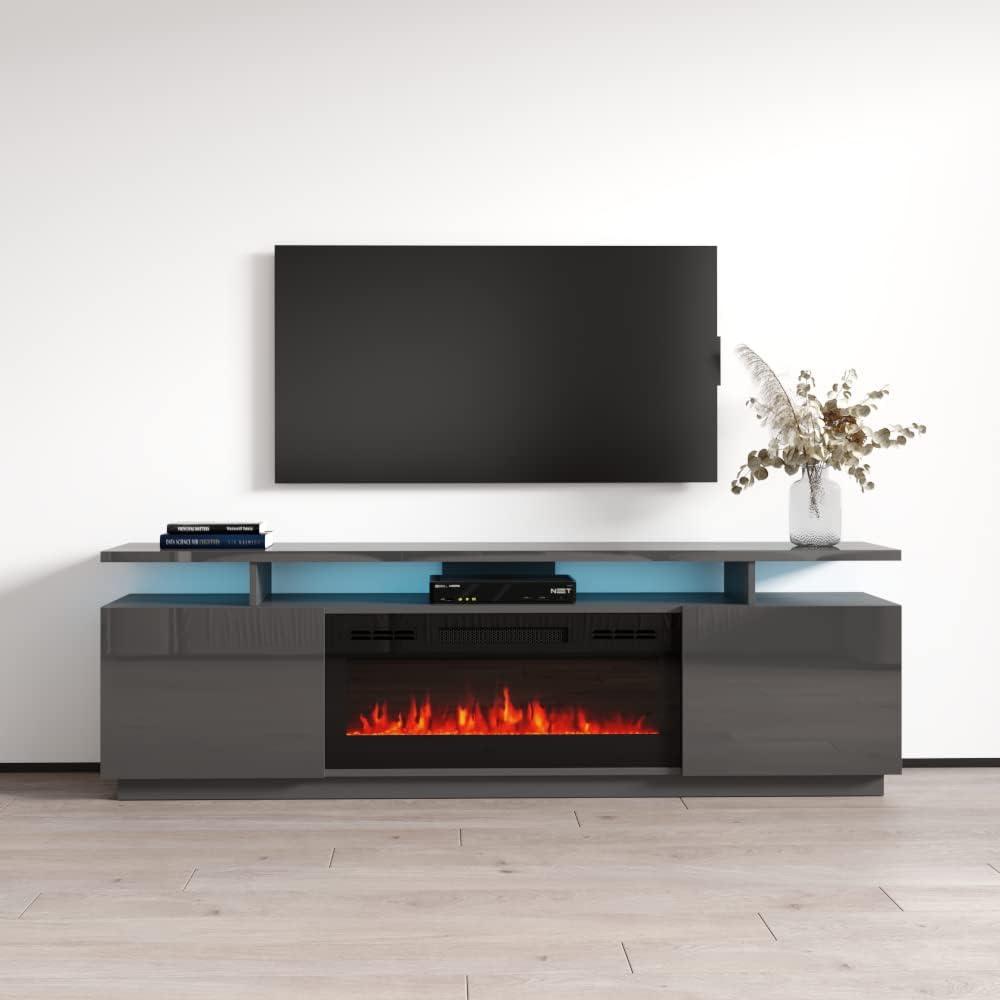
Late afternoon light skims the high-gloss gray surface and throws a soft band of reflection across the room. Meble Furniture’s Eva KBL TV Stand (the Eva) has a low, wide silhouette that reads substantial without looking bulky. When you slide a hand across the top the engineered wood feels cool and smooth, the edges crisp where the finish meets the cabinet doors. The doors sit flush, giving the front a tidy, continuous horizon while the unit’s length balances the screen above.switch on the electric fireplace and a subtle, multicolor LED glow lifts from the hearth—flecks of color pick out the gloss and soften the modern lines as evening settles in.
A first look at the Eva KBL TV stand with electric fireplace for your eighty inch setup
When an eighty-inch screen is placed on the console, the first impression is about scale and sightlines rather then construction details. The top surface becomes a visual anchor, and the fireplace glow sits beneath the picture plane, sometimes softened or partially hidden depending on viewing distance and seating height. Observers often notice how the integrated LED accents interact with on-screen colors during dim scenes; at times the LEDs add a complementary wash, and at other times they can read as competing light sources. Small, practical checks tend to come up right away:
- Visual balance — how centered the screen reads from the primary seating area
- Fireplace visibility — whether the flame effect remains visible or is masked by the TV’s lower edge
- Access points — how reachable back-panel openings and controls feel once the screen is in place
These are the kinds of observations that show up during an initial setup session and led to quick, sometimes instinctive adjustments like stepping the stand slightly forward or angling the screen to restore a preferred sightline.
Practical interactions also reveal themselves on first use: cables get routed while the screen is held in place, remotes are tested for reach to the fireplace control, and the interplay of room lighting with the LEDs is judged across evening hours. There is a natural trade-off between a tightly framed multimedia look and preserving the fireplace’s visible warmth — the larger screen tends to dominate the visual field, which can make the flame effect feel more like ambient trim than a focal point. Ventilation openings, door swing clearances, and the ease of reaching storage compartments are often noticed in the same session; these behaviors tend to shape quick decisions about furniture placement and how much space is left in front for seating.
| Observation | Typical effect with an eighty-inch screen |
|---|---|
| LED ambiance | May supplement or compete with on-screen color depending on brightness |
| Flame visibility | Can be subtle when the screen’s lower edge aligns close to eye level |
| Cable access | Often requires temporary repositioning during initial hookup |
Full specifications and configuration details are listed here.
How the glossy grey surface and subtle lines change the mood of your living area
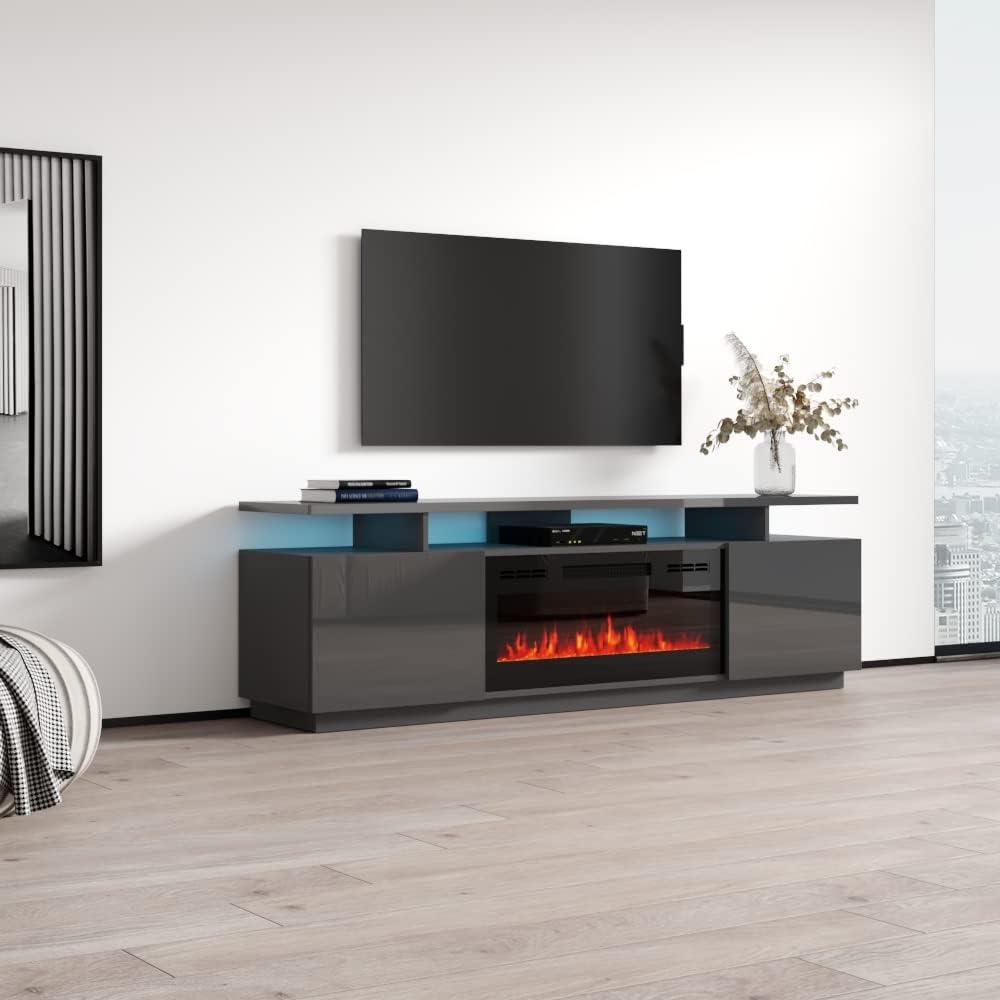
The glossy grey surface works much like a shallow mirror: it picks up and softens the room’s light, creating a subtle sense of depth without shouting for attention.In daylight it can lend a cool, silvery sheen that makes walls and textiles read a touch lighter; under warmer lamps the same finish absorbs some warmth and appears gentler, so the console never reads exactly the same from hour to hour. The piece’s slim, understated lines act as a quiet visual rhythm across the front — they break up the gloss into manageable planes, guiding the eye horizontally and helping larger rooms feel steadier while adding a modest vertical lift in narrower spaces. At close range the sheen exposes fingerprints and small smudges more readily, and in very bright sunlight it can throw mild highlights that draw attention to the surface rather than the objects on it.
Observed in everyday use, the combination of gloss and faint linear detailing nudges the room’s mood in predictable ways. A few common tendencies you might notice:
- Soft focus: reflections blur edges,so seating areas feel a little more relaxed in perception.
- Subtle formality: the sheen introduces a neat, composed tone without feeling overly ornate.
- Visual anchoring: the lines help organize cluttered vignettes, directing attention along the console rather than into visual chaos.
| Lighting condition | Perceived effect |
|---|---|
| Morning natural light | Cool, airy reflection that brightens nearby colors |
| Afternoon / direct light | Stronger highlights and occasional glare on angles |
| evening / warm light | Surface reads warmer and more subdued, lending a cozy feel |
You may find yourself making small, habitual adjustments—tilting a lamp, moving a throw pillow, or angling seating—just to catch the finish at an angle that matches the mood you want in any given moment.
Up close with the materials construction and LED accents you can see and touch
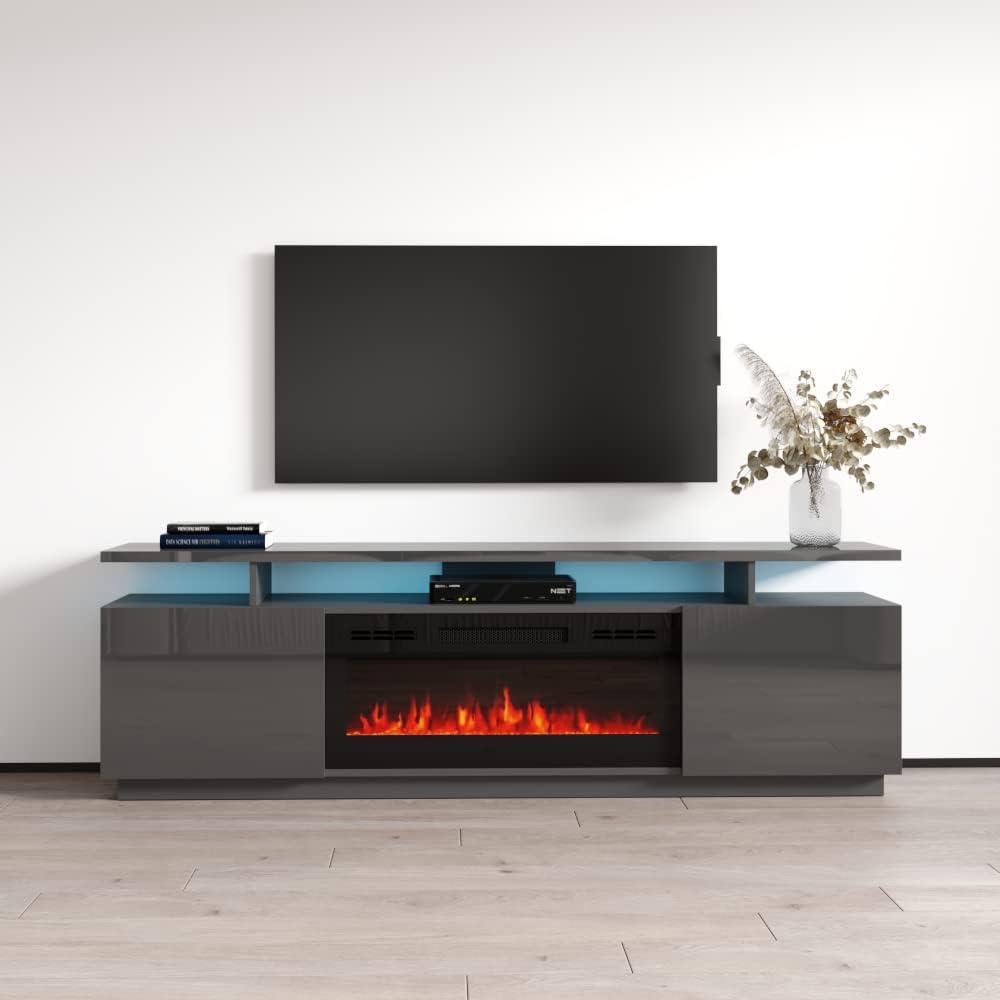
The grey high-gloss panels feel smooth under your palm, more like a polished laminate than raw wood—there’s a reflective sheen that catches light and shows fingerprints and dust more readily than a matte finish. when you run your hand along the top edge and cabinet faces you notice precise seams where panels meet; the joins are tight, with only a slight line of shadow under certain angles. The cabinet doors close with a firm, audible contact rather than a soft glide, and the hardware is integrated so you don’t have exposed pulls to catch on clothing. In everyday use this means you find yourself wiping smudges out of habit and angling the console to avoid direct glare rather than hiding its surface entirely.
- surface feel: glassy, cool to touch, shows light scuffs and prints
- Edges and joins: clean meeting lines, slight visual seam where panels connect
- Door action: decisive closing sound, flush alignment when shut
The LED accents are visible as a soft band of color rather than a row of hot spots, though if you lean in closely you can pick out individual LEDs behind the diffuser. Changing the color shifts how the grey finish reads—warmer tones make the gloss look deeper, cooler tones give a sleeker, more modern cast—and the glow spills onto nearby floors and walls in a subtle wash that’s easy to see at night. Controls for the lighting respond with immediate changes rather than gradual fades, so the color transition frequently enough feels abrupt in the moment; the lights themselves are housed behind trim so you don’t feel any warmth or texture change where the strip runs.
| LED characteristic | What you’ll notice up close |
|---|---|
| Diffusion | Soft, even wash with faint visibility of individual diodes near the edge |
| Color options | Three distinct tones that alter the perceived depth of the finish |
| Tactile impact | No raised strip or heat at the surface; purely visual accenting |
Measuring fit in your room where overall dimensions clearance and cabinet depth matter
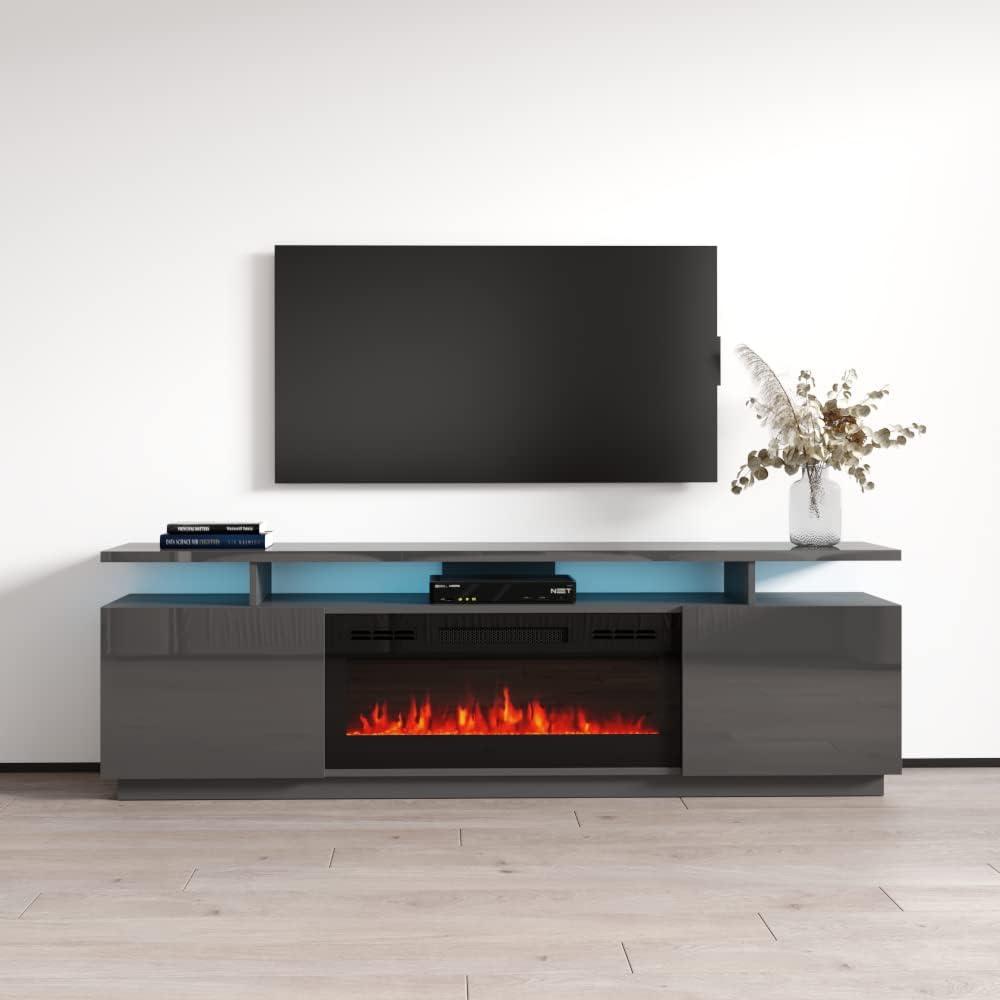
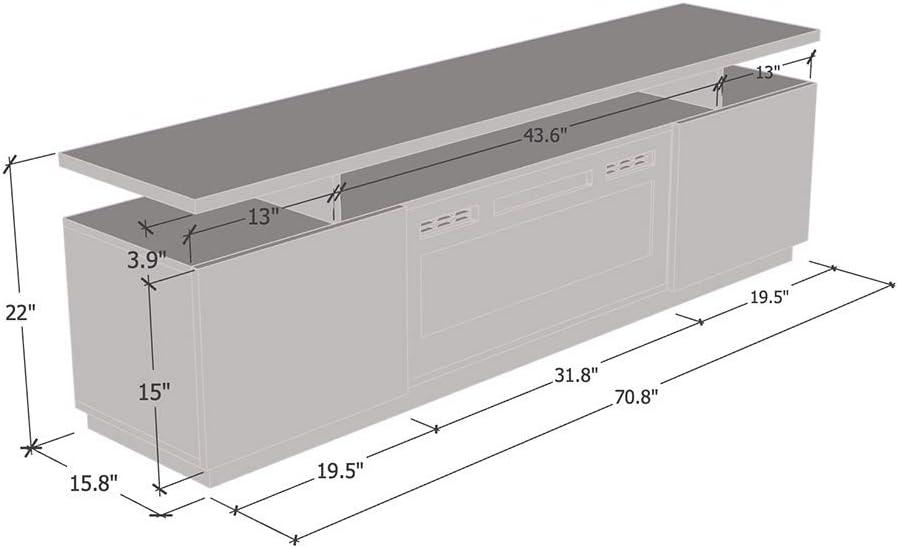
Measuring fit starts with matching the unit’s footprint to the physical realities of the room. Take note of the available wall width and the distance from the wall to the main seating area; many households discover the cabinet’s depth changes sightlines more than its width, especially when a TV sits on top or a swivel base is used. Think about access paths during delivery and installation—narrow hallways, tight stair turns and door clearances frequently dictate whether an item arrives intact or needs partial disassembly. In everyday use, small choices—pulling the console a half-inch from the wall to route cables, angling it slightly to avoid glare, or sliding it a touch to accommodate a baseboard heater—are common and often determine the final placement as much as raw measurements do.
- Width vs. wall space: measure the full span of the wall and note nearby furniture that constrains lateral placement.
- Depth and projection: record how far the cabinet will extend into the room and whether that impinges on walkways or seating footprints.
- Vertical clearance: check for shelves, windowsills, or trim above the planned position that could limit stacking or mounting options.
| Measurement | Common check | Practical observation |
|---|---|---|
| Wall width | Measure usable wall span between obstructions | Even a few inches on either side change the visual balance and access to cabinet doors |
| Cabinet depth | Measure from wall to front edge,accounting for baseboards and cable runs | Shallow rooms can make the cabinet feel intrusive; slight offsets for cabling are frequently used |
| delivery/installation clearance | measure door frames,stair widths,and elevator dimensions | Sometimes the unit must be tilted or partially disassembled to pass through tight spaces |
A little flexibility—small shifts,brief reorientation of nearby furniture,or temporary removal of trim—often resolves tight fits without major room rearrangement. Full specifications and configuration details can be viewed here: View full specifications
Everyday interactions how the storage doors shelves fireplace controls and viewing height shape your use
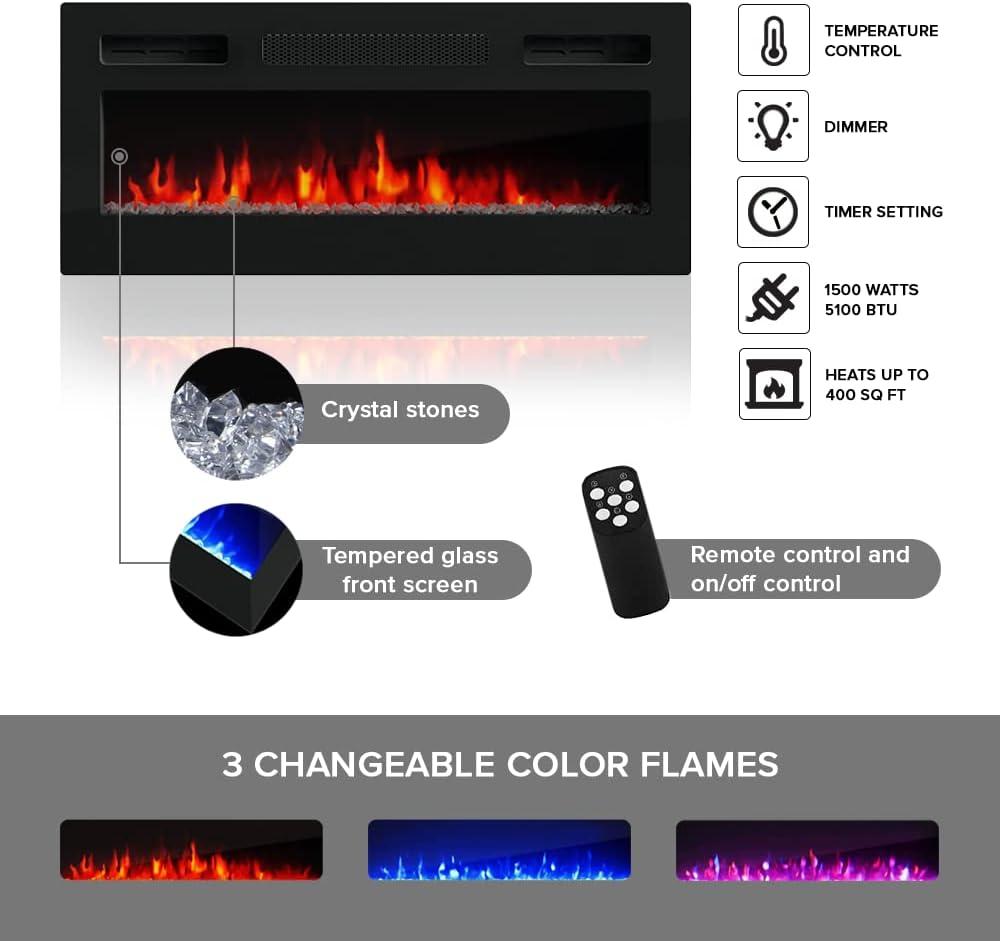
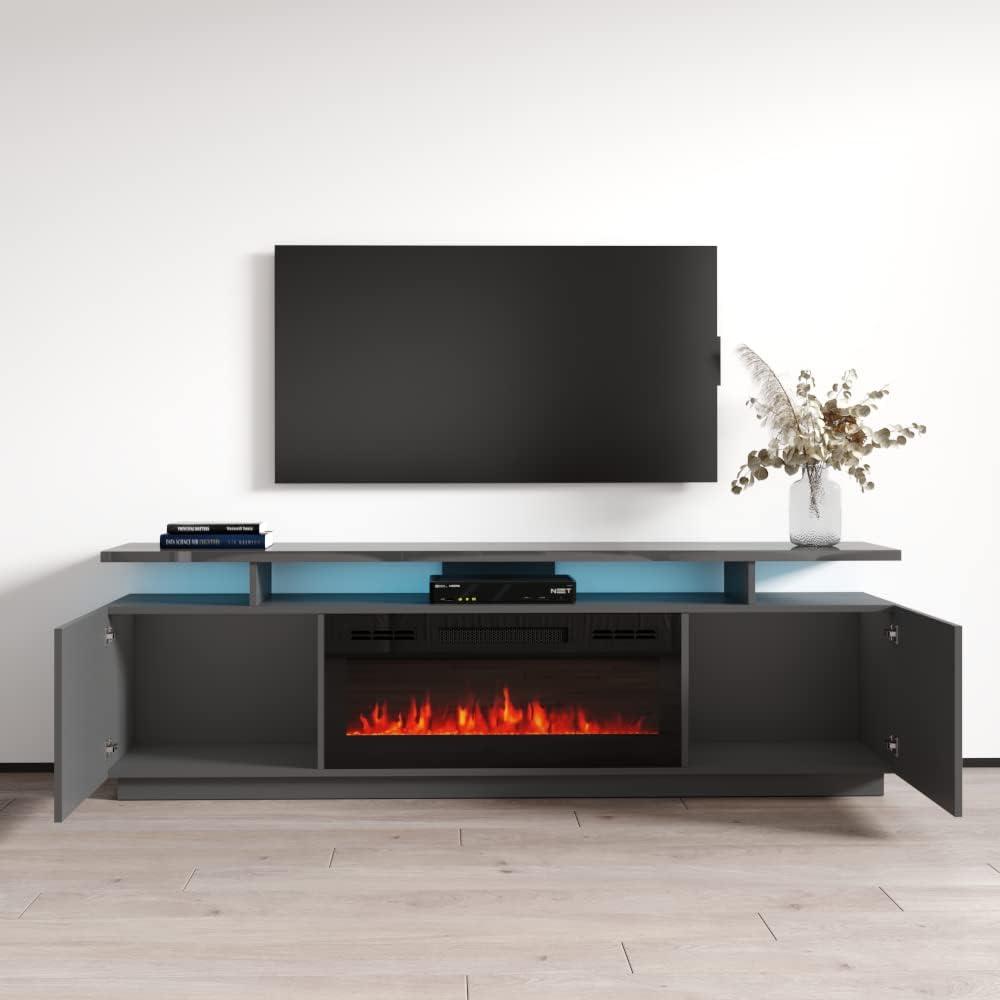
Day-to-day use is shaped by small motions more than grand gestures: opening the storage doors to grab a game controller becomes automatic, sliding items onto a shelf is part of your tidying routine, and the fireplace lighting gets nudged when the room mood shifts. In practice you move around the unit in predictable ways — reach for the center cabinets when the remote slips between couch cushions, lean in to swap a disc or cable on the shelves, and occasionally wipe the high-gloss surfaces where fingerprints collect. The physical layout nudges certain habits: things you access most often tend to live on the outer shelves or the top of the cabinet rather than the deeper recesses,and doors that close in front of electronics encourage you to keep frequently used items in the open. Small, habitual adjustments — angling a router antenna, lifting a door just enough to reach a connector — become part of how the stand fits into your routine.
Interactions around the fireplace controls and the stand’s viewing height shape how you sit, what you notice, and when you interact. The control area (whether a button panel or a handheld controller) gets used during short, repeatable moments — changing flame color for movie night, dimming LEDs after guests leave, or switching the heater on for a quick warm-up — and those touches tend to be done from the couch rather than standing at the unit.Viewing height influences posture: you find yourself moving cushions, adjusting where you perch on the sofa, or tilting a laptop slightly to line up with the screen; it also affects how frequently enough you look down toward the fireplace rather of straight ahead at the TV. A quick reference of common touchpoints appears below for how these elements show up in everyday routines.
- doors: frequent brief openings for remotes and small accessories, occasional full clears to reorganize.
- Shelves: staging areas for devices you use daily and for things you forget to put away.
- Fireplace controls: short, intermittent interactions to tweak light and heat settings based on activity.
- Viewing height: subtle adjustments to seating and screen angle that recur over time.
| Control or Area | Typical moment of use |
|---|---|
| Cabinet doors | Grabbing remotes, swapping discs, small tidy-ups |
| Shelves | Docking consoles, staging decor, quick access to frequently used items |
| Fireplace controls | Changing LED color or flame intensity before/after viewing sessions |
| Viewing plane | Adjusting pillows or seating positions to reduce neck strain |
How it performs in your home and what to expect compared with the specs across different setups
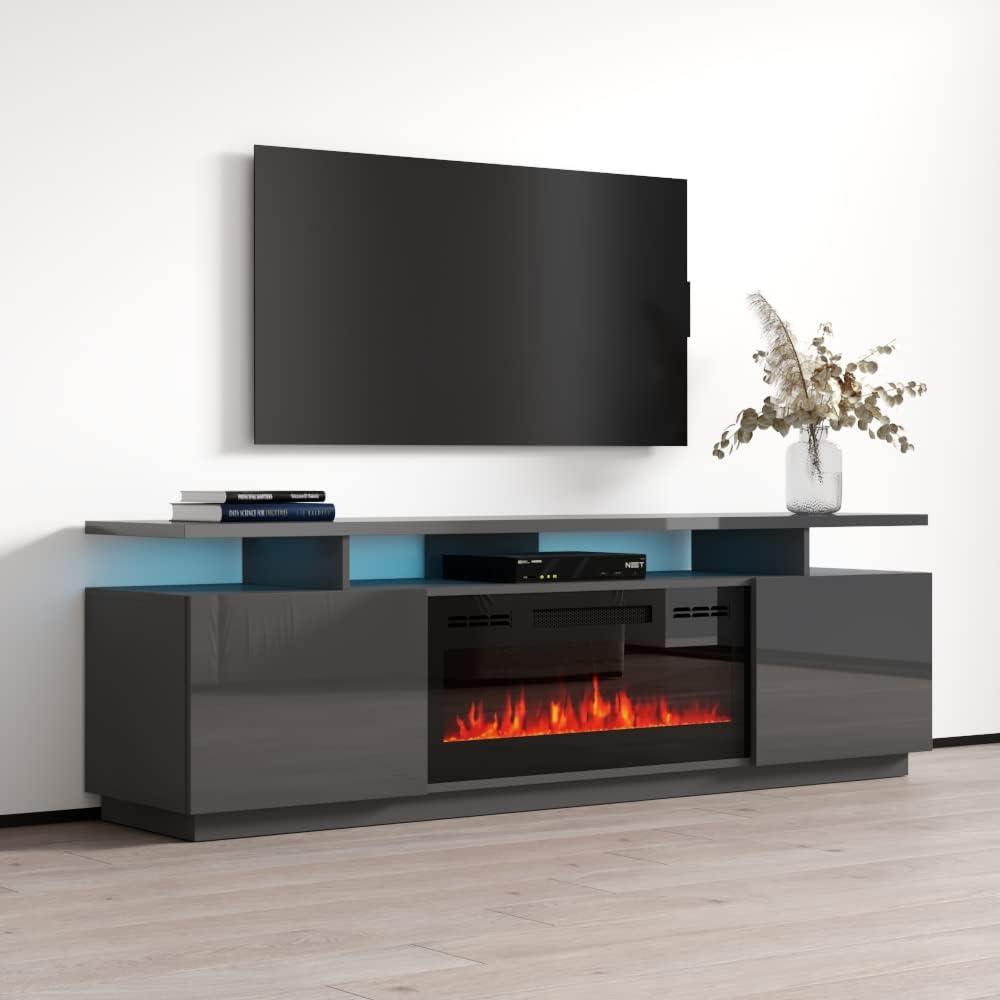
The electric insert tends to deliver noticeable, localized warmth—enough to take the chill off when sitting nearby but not to act as a primary heater for a larger, open-plan area. the LED flame effects show up best in subdued lighting; in bright rooms the colors can look washed and the multicolor options are more subtle than they appear in product photos. Surfaces with a high-gloss finish pick up fingerprints and dust readily, so the unit can look less pristine between quick wipes; on uneven floors small adjustments to the base are often needed to prevent a slight wobble. During everyday use, cable access and component placement behave predictably: cables are manageable but may require routing choices that depend on nearby outlets and AV equipment layout, and heavier screens benefit from two-person handling when positioning on top.
- Compact bedrooms: heat and LED effects feel intimate and effective close to the unit.
- Open living areas: Flame visuals are decorative rather than dramatic; warmth is localized.
- Media centers with many devices: Cable routing needs a bit more planning to keep vents and access clear.
| Typical setup | Observed behavior |
|---|---|
| Small room / close seating | Flame effect and supplemental heat register strongly; LEDs create mood lighting. |
| Large or open-plan space | Visuals remain ambient; warming effect dissipates beyond nearby seating. |
| Tight AV cabinet arrangement | Requires deliberate cable routing to avoid blocking vent openings or access panels. |
See full listing and configuration details
Maintenance and cable routing what you will notice after weeks of regular use
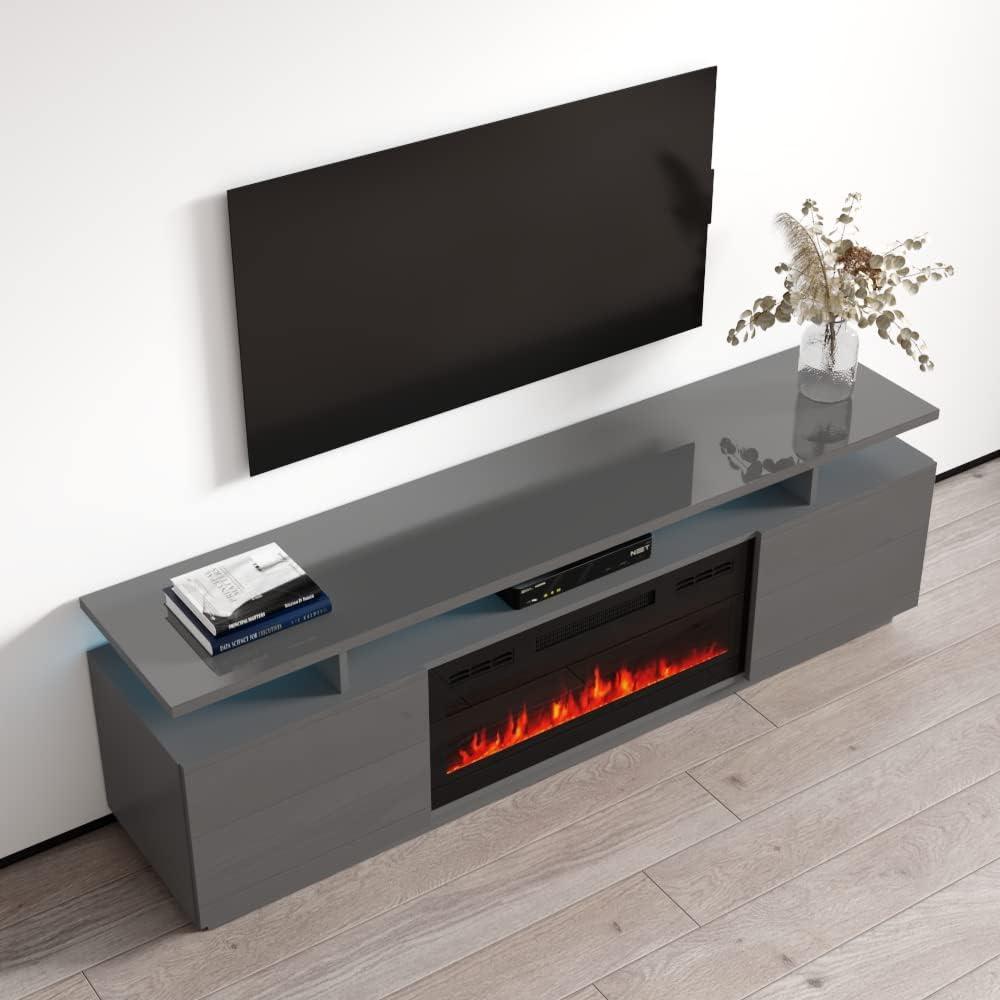
After a few weeks of everyday use you’ll notice the finish shows exactly what it is: dust, fingerprints and the occasional smudge collect in predictable places. The tops and cabinet fronts attract quick surface marks from remote controls and cups, and wiping with a soft cloth becomes part of a short routine rather than a deep cleaning session. hinges and magnetic catches settle into place — sometimes a door will need a tiny nudge back into alignment after you’ve rearranged components — and small amounts of lint tend to gather in the fireplace vent and around the LED trim. The LED lenses and control buttons pick up fingerprints and fine dust, so those areas get the most frequent attention; overall the surfaces are straightforward to clean, but they show daily life readily and you’ll find yourself cleaning selectively rather than the entire unit every time.
Behind the stand is where most of the lived-in surprises appear: cables shift, bunch and develop natural curves as devices are plugged and unplugged. The built-in routing openings do a reasonable job of hiding lines, but you’ll see cables drape over the back shelf or splay out along the floor unless you re-tie them periodically. You’ll also learn which cable lengths give the cleanest run and which need a little extra slack to avoid tugging on plugs. What you’ll likely adjust includes a few simple, repeated actions:
- re-tensioning ties and re-centering multi-plug strips
- wiping dust from vents and LED housing more often than inside cabinets
| Common issue | What you’ll notice after weeks |
|---|---|
| Cable bunching | Visible loops behind the stand and occasional tight bends at connectors |
| Vent dust | Fine lint collecting near the fireplace outlet and LED vents |
| Fasteners | Screws and hinges that benefit from a quick re-tighten after handling |
How It Lives in the Space
over time the piece stops announcing itself and simply becomes part of the room’s rhythms; you notice your hand pausing where the remote tends to live. The Eva KBL TV Stand with Electric Fireplace – Modern High Gloss TV Console with Storage cabinets and LED Lights – Media Entertainment Center Up to 80″ – Color grey sits in the corner as light shifts, its surfaces collecting the small scuffs and fingerprints of ordinary days. As the room is used, it reshapes how seating settles, takes the casual weight of blankets and mugs, and in daily routines those little marks make it feel familiar rather than new. You stop looking for it and it stays.