Furinno Jaya Stand: how it fits your everyday gear

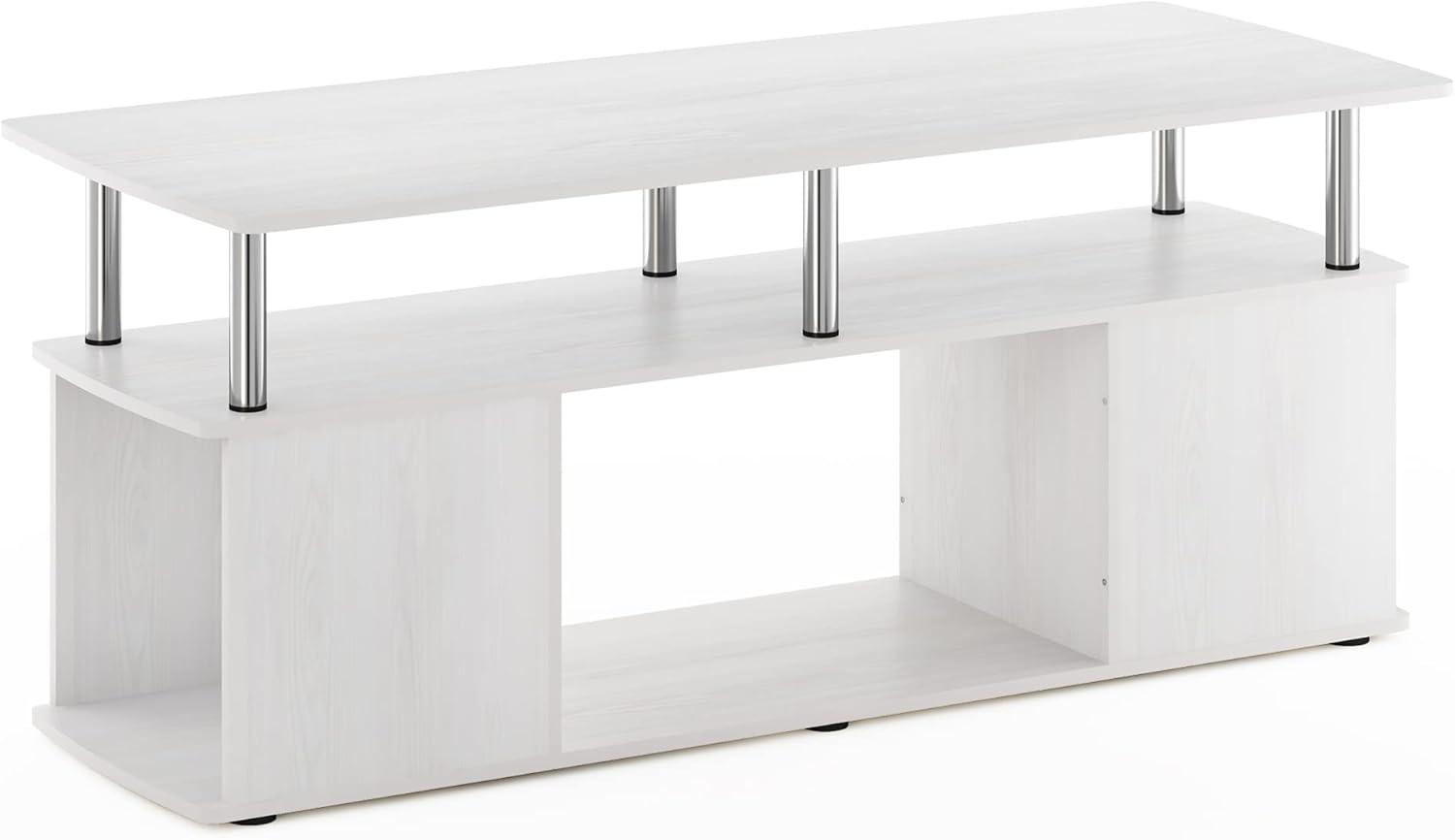
You spot it as you cross the room: a low, nearly four‑foot console in a pale white‑oak finish, its slim stainless‑steel tubes catching the afternoon light. The Furinno Jaya stand sits with an unassuming profile — open shelves already holding a streaming box and a loose stack of magazines,two shallow doors interrupting the horizontal line. When you run a hand over the top the laminate has a faint tooth and the center gives a subtle flex, details that calibrate how much visual weight it actually carries. From the sofa it reads as straightforward and lived‑in, the woodgrain and metal keeping the silhouette airy rather than heavy.
A first look at what the Furinno Jaya stand brings to your room
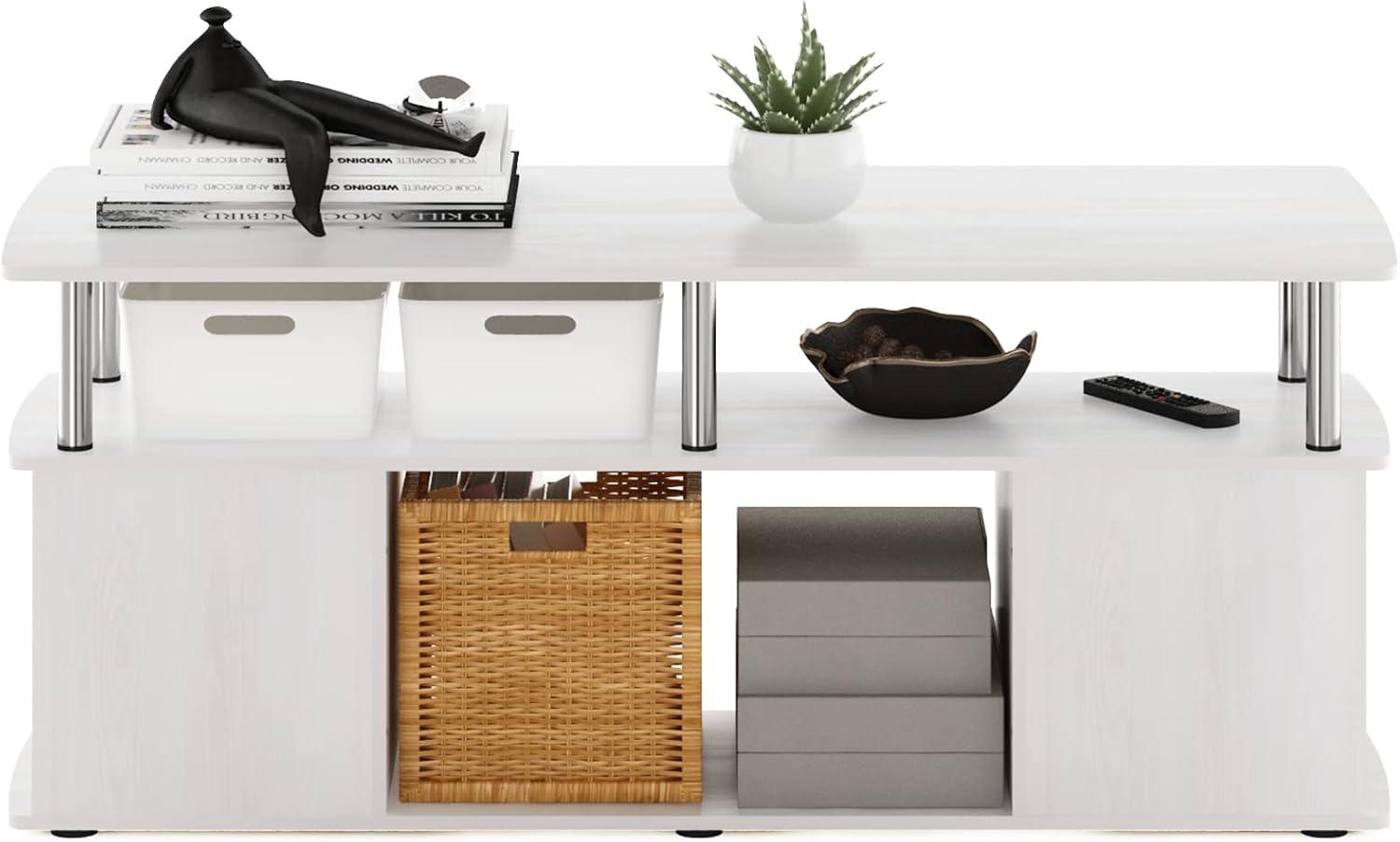
When you first place the stand in your room it reads as a modest, horizontal anchor beneath the screen — not loud, but clearly present. From a short distance the arrangement has a calming, unbusy quality: open surfaces keep sightlines moving and the slim vertical supports break up the horizontal mass so the piece doesn’t dominate a wall.In different lighting the surface can pick up warm or cool tones from windows and lamps, and the metallic accents catch brief glints when you pass by. A few incidental behaviors tend to emerge quickly: you’ll drop remotes on the top between shows,set a small plant or lamp to one side,and sometimes shuffle remotes or game pads around to make room for a snack bowl during movie night.
- Visual footprint: stays low and unobtrusive, so sightlines in the room feel less cramped
- Surface behavior: shows fingerprints and dust more readily in bright light, which means occasional wiping
- Everyday interaction: invites casual placement of frequently used items rather than formal staging
| Room condition | Noticeable effect |
|---|---|
| Compact living area | Keeps the TV corner feeling open without eating into circulation space |
| Well-lit room | Top and supports reflect light, adding subtle highlights to the setup |
The combination of openness and modest presence tends to make the media area feel like part of daily flow rather than a staged focal point, tho the openness also means you’ll notice clutter and dust sooner than with closed furniture.
How the white oak finish and stainless steel tubing read in your living space
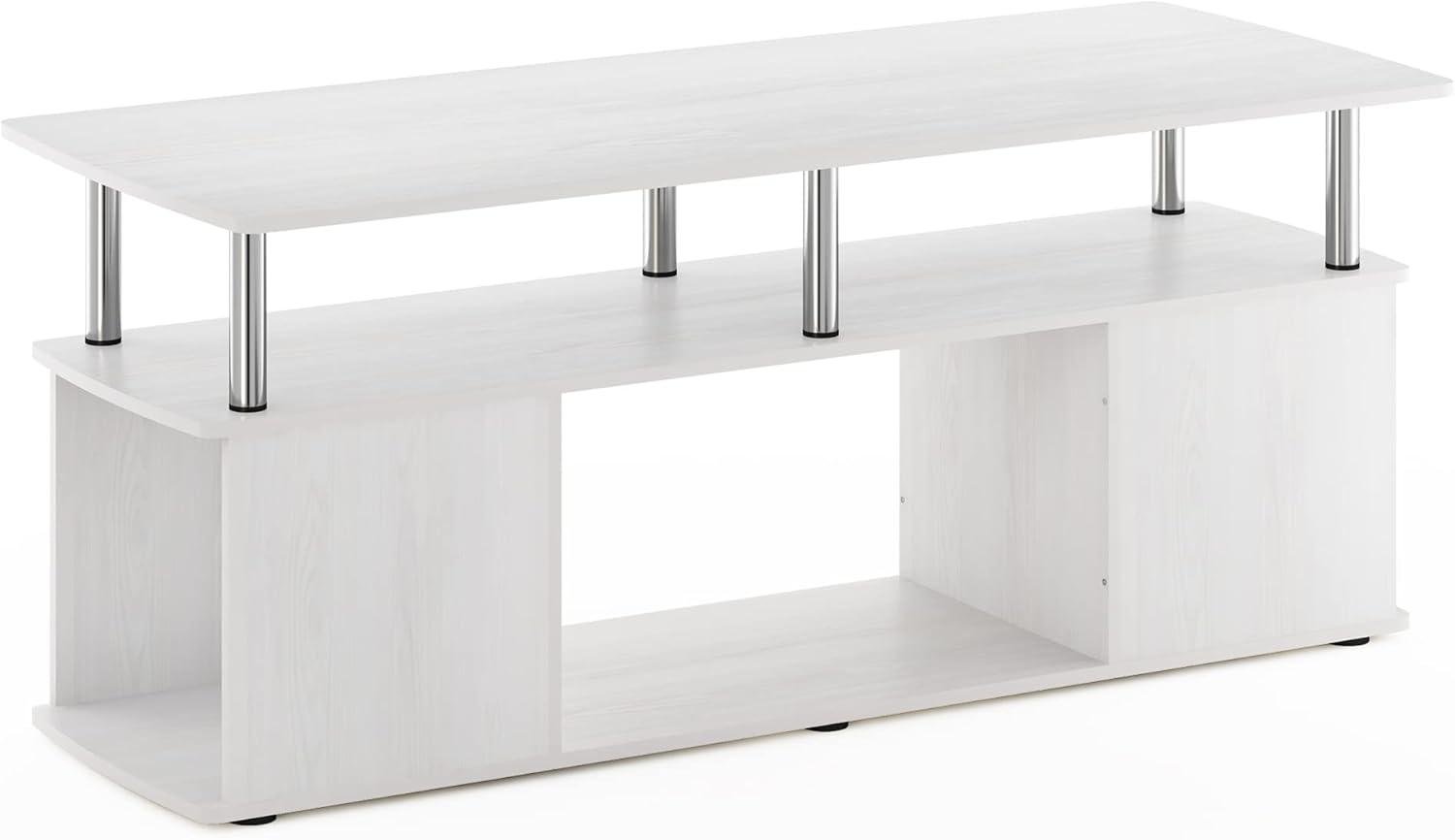
Up close, the white oak finish reads as a muted, slightly warm surface that quiets brighter elements around it; in natural light the grain shows more variation and in lower light it can edge toward a neutral, almost bleached tone. You’ll notice it pairs with softer textiles (throw pillows, woven rugs) by absorbing rather than competing with patterns, and next to darker furniture it provides a subtle midpoint between pale walls and deep woods. The stainless steel tubing introduces thin, cool highlights — the tubes catch window light and lamp glow in a way that makes the stand feel visually lighter than a solid-wood silhouette would, though they can also betray fingerprints or small smudges when viewed at close range.
| Lighting | How the finishes read |
|---|---|
| Bright daylight | Oak grain is more pronounced; steel has crisp reflections |
| Warm incandescent/LED | Oak appears warmer; steel shifts toward subtle gleam |
| Dim evening light | Oak flattens to a neutral tone; steel becomes less obvious |
- Positioning near a window tends to emphasize the wood grain; under a lamp, the steel accents step forward.
- When other metal finishes are present in the room, the tubing either harmonizes or becomes a purposeful contrast depending on their tone.
- Everyday habits — nudging the stand a little to avoid screen reflections, wiping the steel after handling — shape how noticeable those finishes remain over time.
what the materials and construction reveal when you inspect the pieces
When you take a closer look at each component, you notice a mix of manufacture signals rather than a single refined finish. The top and shelf panels carry a thin laminate with a faint wood pattern; under the light you can see where the edge banding meets the face layer and feel a slight ridge if you run a fingertip along it. Fastener locations are obvious: small circular impressions and partially recessed heads mark where dowels and cam-locks pull pieces together,and the pre-drilled holes line up in a way that makes trial-fitting straightforward. The metal tubes feel cool and hollow; their surface has a brushed look with capped ends that hide the welds or joins. You might find yourself nudging a panel a millimeter or two during assembly to get those cam-locks to seat fully, which is part of the tactile story the construction tells as you work.
- Surface finish: thin laminate with visible grain pattern and seam lines along edges
- Fastening system: cam-lock impressions, dowel marks and pilot holes that reveal a modular assembly method
- Metalwork: hollow tubes with a brushed face and end caps that indicate light-gauge construction
Looking at the pieces laid out on the floor, the panels show a consistent core density when pressed—there’s not a spongey give, but the particle core compresses slightly under firm pressure, which explains why edges deserve a careful touch during handling. The shelf peg holes are simple and functional; repeated repositioning would likely leave small marks, so you can tell how the product will behave after a few rearrangements. Small manufacturing details stand out in everyday use: screw heads sit flush when tightened, labels or paper templates sometimes remain on the inner faces, and wipe-clean surfaces show fingerprints differently depending on how the light hits them. the materials and joinery reveal a system built for straightforward assembly and routine use, with the usual trade-offs between lightness and edge vulnerability.
| component | What inspection reveals |
|---|---|
| Panel faces | Thin laminate with printed grain; seam at edge banding and slight surface sheen |
| Core material | particle/composite core that compresses marginally under pressure |
| Fasteners | Cam-locks, dowels and pilot holes visible; alignment requires small nudges |
| Metal tubes | Hollow, brushed surface with end caps; light-gauge feel but clean finishes |
How the footprint and shelf spacing relate to your TV size and furniture layout
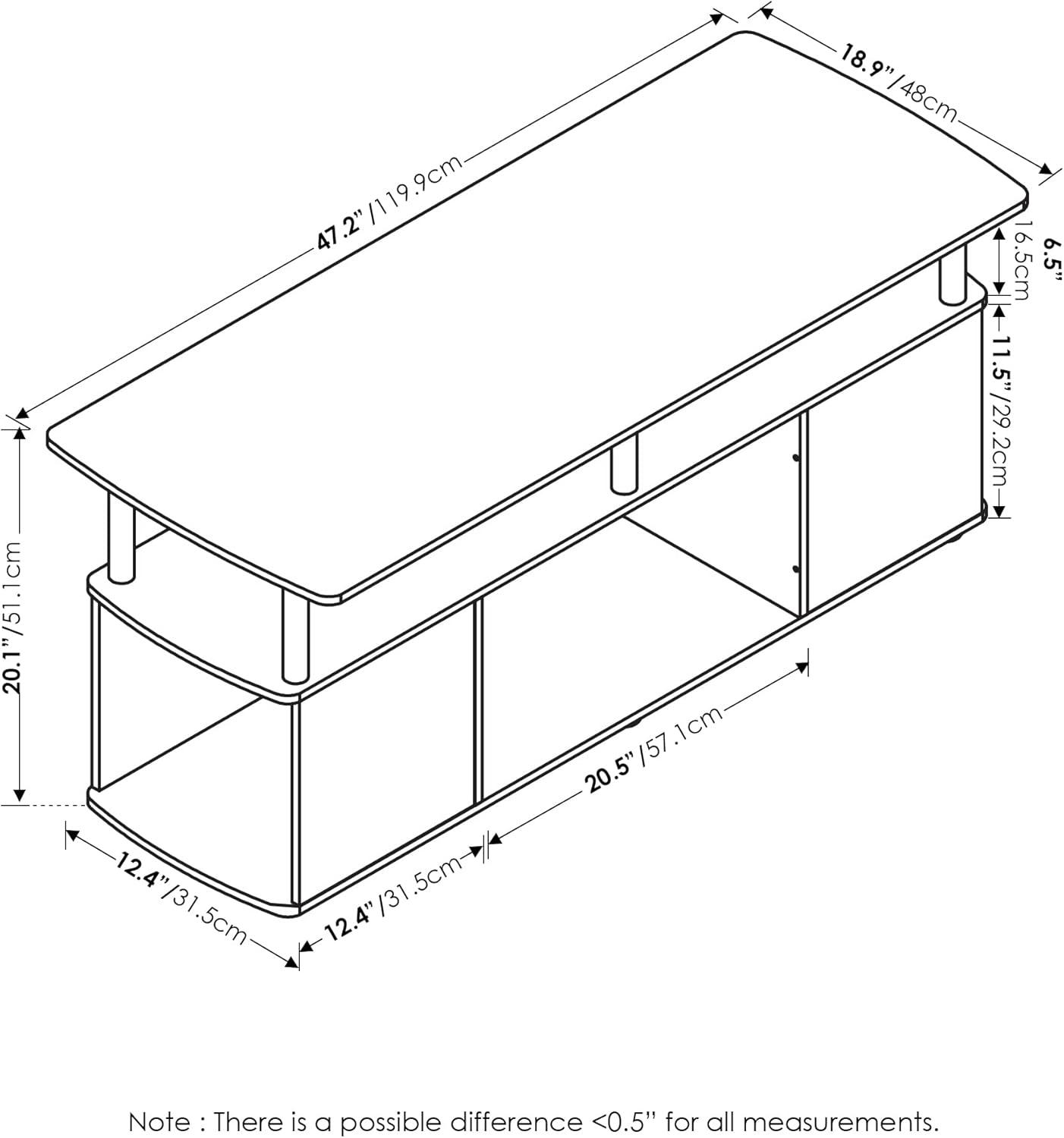
How the stand sits in a room often matters more than any single spec: a relatively shallow footprint keeps the piece closer to the wall so it doesn’t eat into circulation paths, while the overall width determines whether the TV looks centered or appears to overhang the edges. Shelf spacing shapes daily habits—low shelves tend to become a place for stacked game consoles and streaming boxes, while taller gaps are where you’ll leave items that need airflow or occasional access. In use, you’ll find small adjustments happen naturally: nudging a speaker forward, angling a console slightly for remote line-of-sight, or routing cords so they don’t drape over the front edge. These behaviors reflect trade-offs between saving floor depth and keeping components accessible and ventilated.
- Depth and clearance: a shallow base leaves more room in front of seating but can limit how far a screen or soundbar can overhang without looking top-heavy.
- Top-surface reach: wider tops give more lateral breathing room for decorative items or side speakers, which affects whether the TV sits flush with adjacent furniture.
- Vertical shelf spacing: tighter vertical gaps are fine for slim devices and remotes but can make taller boxes sit awkwardly or require external stacking.
| Layout scenario | How footprint and shelf spacing interact |
|---|---|
| Compact living room | Shallow depth keeps walkways clear; shelving becomes active storage for consoles and remotes, often stacked or slightly offset for access. |
| Narrow entry or hallway | Stand sits close to wall and functions as a console; top width limits how much decorative clutter you can place beside the screen. |
| Open-plan media wall | More lateral space lets speakers and decor spread out; shelf spacing is used for a mix of devices and display items, so airflow and sightlines matter more. |
How the open storage and cable access shape everyday use in your setup
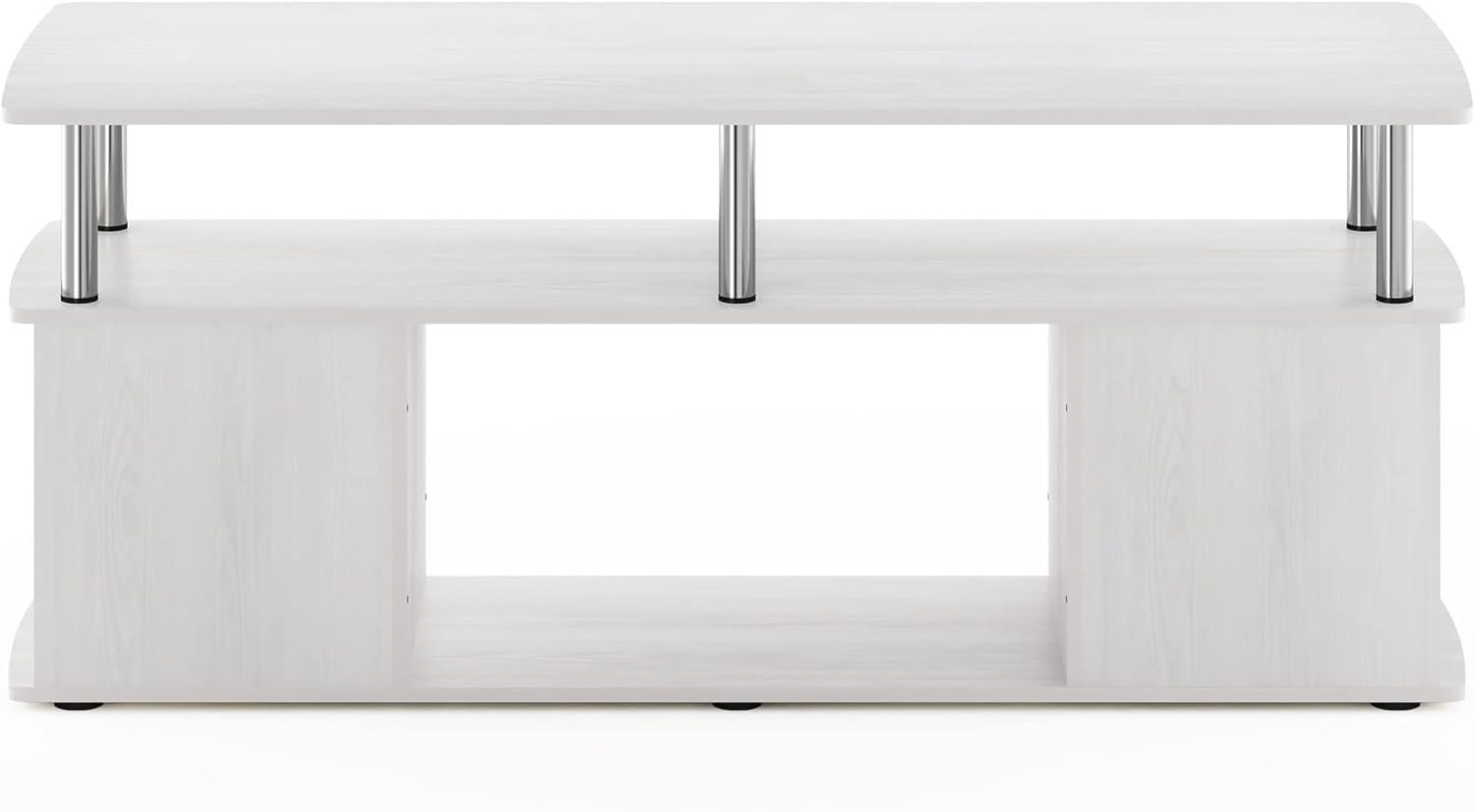
Open shelves change how you interact with your gear: devices are in plain sight, so swapping a streaming stick or grabbing a game controller becomes an unplanned, frictionless move rather than a small project. Because everything is visible you tend to develop little routines — stacking controllers on the middle shelf, sliding the soundbar forward when you need a clear signal, or nudging a router slightly to keep its lights visible. The same visibility also shapes cleaning and upkeep habits; dusting moves higher on the list and you’ll occasionally rearrange a box or decorative item simply to clear a pathway for a charging cable or IR receiver. In most cases the open layout makes quick access effortless, though it also means cords and power strips end up as part of the everyday scene rather than hidden away.
Cable access determines how neat that everyday scene actually looks and how often you fiddle with connections. back openings and pass-throughs let you park a power strip behind a shelf and plug in devices without sliding the whole unit out, so reconnecting a console or swapping HDMI inputs can happen in seconds. At times you’ll find cables looping or draping across a shelf edge, and you tend to use simple fixes — Velcro wraps, short extension leads, or gentle coiling — to keep things from snagging when you pull a player forward.The table below captures common pairings and the typical cable behavior they produce in daily use.
| Device | Typical placement & cable behavior |
|---|---|
| Streaming box / Roku | Front shelf, short HDMI run to TV; power tucked behind or down through pass-through |
| Game console | Lower shelf, frequent front access; cables tend to be pulled and re-seated during use |
| Soundbar / speakers | Top-front placement, runs along top shelf edge; power and optical cable usually follow the shelf back |
| router / modem | rear corner of a shelf; cables stay mostly static but need ventilation and occasional reach |
How the stand measures up to your expectations and where it shows limitations
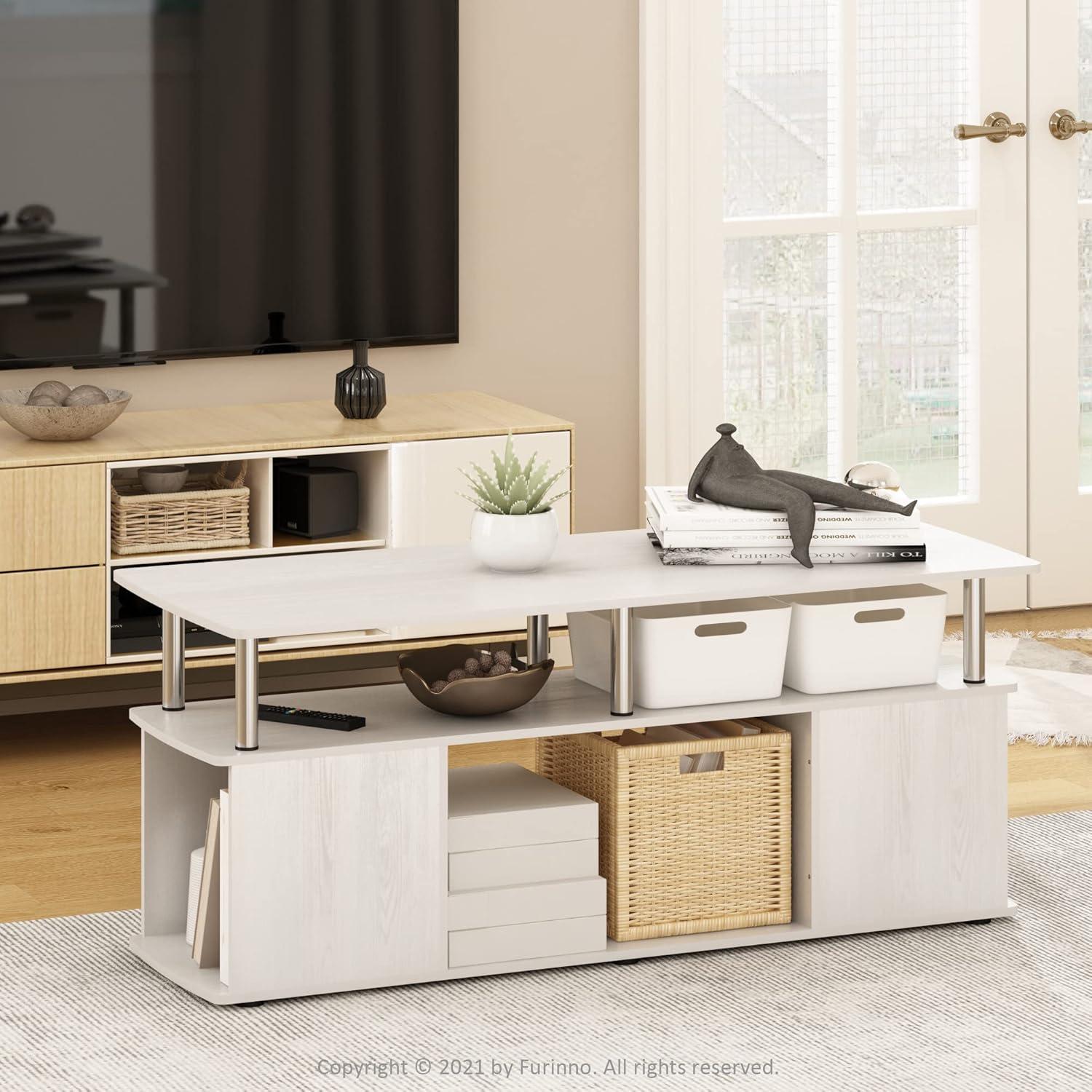
In regular use the stand generally performs as expected for a compact, open-front entertainment unit: electronic components are easy to reach, the top surface functions as a stable platform for a screen during everyday interactions, and routine cleaning is straightforward with a damp cloth. The stand tends to sit unobtrusively in a living area and keeps frequently handled items within easy reach, which makes everyday habits like swapping discs or stashing a remote feel natural. Small adjustments—tightening a tube connection or nudging the piece a little on an uneven floor—are occasional parts of owning it, and the finish usually resists the light scuffs that come from ordinary use.
At the same time several practical limits become apparent over time.
- Cable concealment: cables remain largely exposed behind and between the open spaces, so neatness requires extra routing or accessories.
- Shelf clearance: taller AV components can fit only in some positions, which can force rearrangement of devices or the use of horizontal rather than vertical placement.
- Long-term hardware fit: fasteners and tube joints can loosen with repeated movement and may need occasional retightening.
- Surface wear under heavy use: abrasive cleaners or sharp objects tend to leave marks that a quick wipe won’t remove entirely.
Full specifications and variant details can be viewed here: https://www.amazon.com/dp/B09YJ717NH?tag=decordip-20
What assembling and caring for it looks like in your home
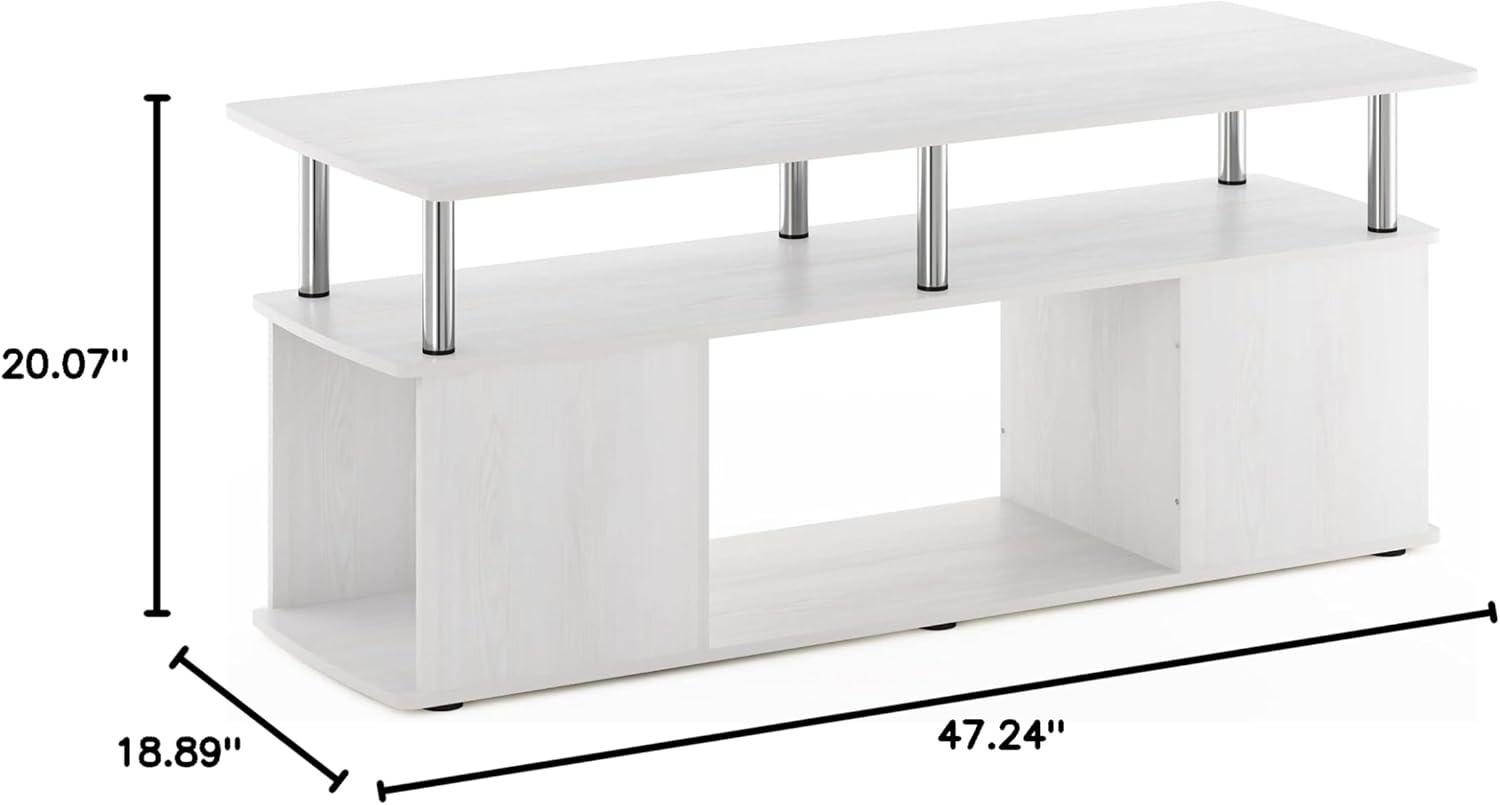
When you bring the pieces into the room, the first thing you notice is that the parts come in small, manageable bundles and the hardware is bagged and labelled, so sorting everything out on the floor becomes part of the process. Assembly tends to go in short, repeatable steps: align the panels, insert the tubes, hand-thread a few screws, than go back and tighten. You’ll find a short Allen key in the package that works for most bolts, though a Phillips screwdriver and a small socket driver can speed things up. there are a few moments that require a little nudging — tubes that need to be coaxed into place or panels that want to sit slightly proud — and you’ll probably pause to re-check alignment before the final tightening. Near the end you’ll shift the stand upright (two people makes that easier) and spend a minute or two adjusting feet or sliding components into the exact position you prefer. Practical assembly notes that tend to help at home:
- Tools: Allen key included; bring a Phillips screwdriver and a soft cloth.
- Workspace: assemble on a rug or carpet to avoid scratches.
- tightening: hand-tighten first, then firm finish-tightening to avoid over-stressing the fittings.
Once it’s in place, caring for the unit becomes part of your routine in small, ordinary ways. Dust collects on the open shelves and along the tops of the tubes, so a quick weekly dusting with a microfibre cloth keeps things tidy; spills or smudges wipe away with a damp cloth, and you avoid abrasive cleaners or harsh chemicals. You’ll also find yourself doing light maintenance now and then — retightening a screw after a few weeks, straightening cables behind the stand, or moving a coaster under a plant to prevent damp rings — rather than large cleaning sessions. A short table lays out common upkeep tasks and typical rhythms you’ll notice in most households:
| Task | Typical frequency / note |
|---|---|
| Quick dusting (microfibre) | Weekly — especially on open shelves |
| Wipe spills or fingerprints | As needed — damp cloth; avoid harsh chemicals |
| Check/tighten fasteners | After first few weeks, then seasonally |
| Adjust positioning or add pads | When moving or if floor is uneven |
How the Set Settles Into the Room
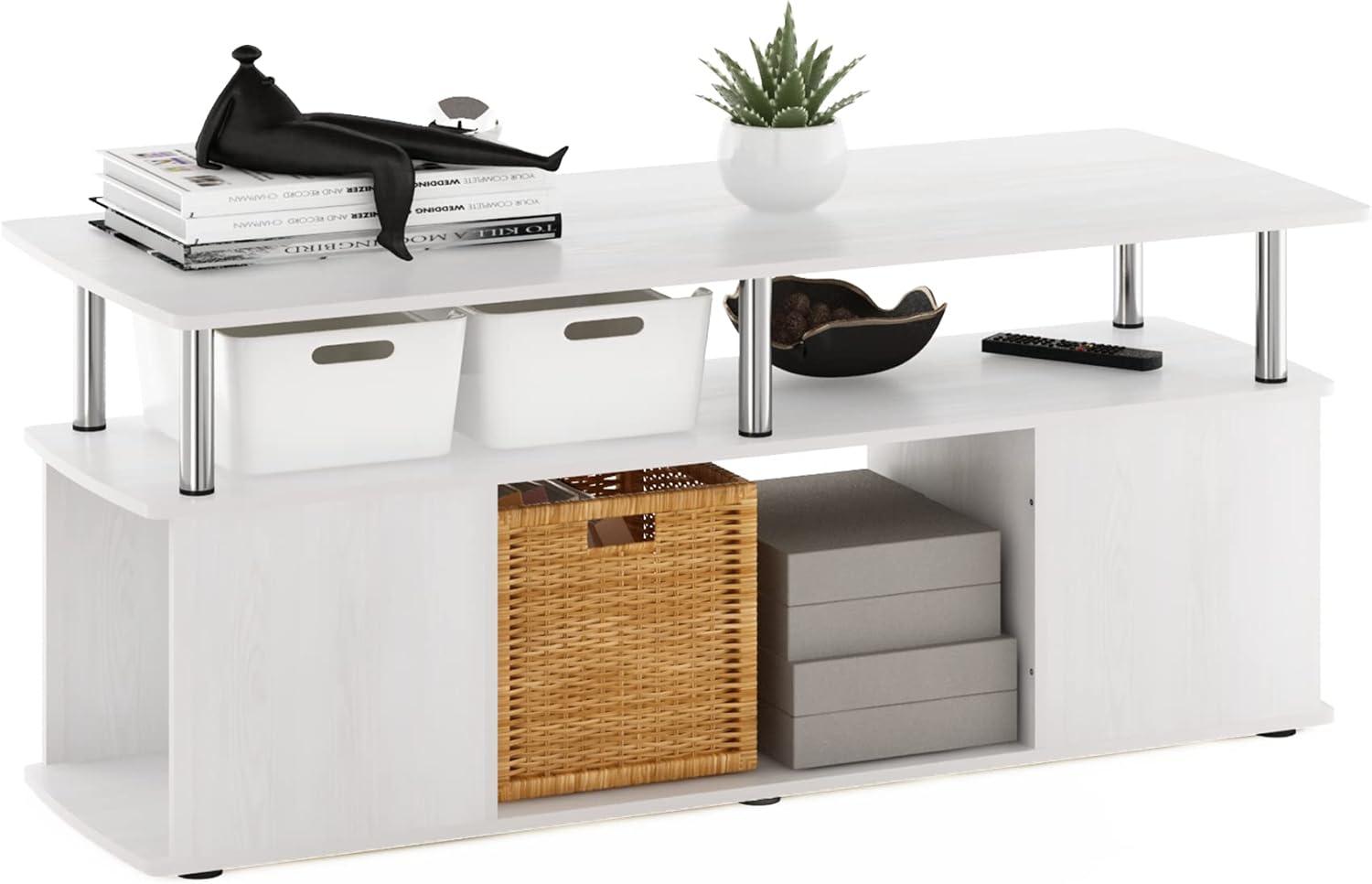
After a few weeks you begin to notice how it moves through daily routines—holding the TV at a familiar height, catching mugs and remotes that drift onto its shelves, and making a small, steady footprint in the living area. The Furinno Jaya Stand shows small signs of use: soft scuffs along an edge, a pale ring from a glass—marks that feel like records of ordinary evenings rather than interruptions. In the regular household rhythms you reach for familiar spots and slide a hand across the top, and its presence quietly folds into the way the room is used. It stays.